![WEARABLE_INSIGHT [FORUM]](https://wearableinsight.net/wp-content/uploads/2025/04/로고-3WEARABLE-INSIGHT1344x256.png)




1. Overview
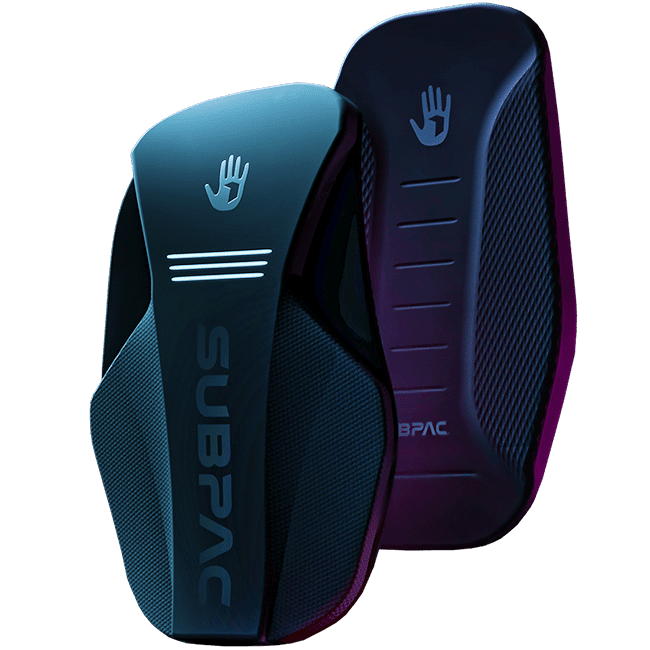
The SubPac series (including the X1 and M2X) are wearable tactile audio systems that convert low-frequency sound (roughly 1–200 Hz) into mechanical vibrations. Instead of projecting bass through air like a subwoofer, SubPac transmits it directly through the body’s surface, letting users feel bass frequencies as deep physical waves across the back and torso.
*Reference : https://subpac.com/
2. Hardware Architecture
-
Low-Frequency Response
Official specifications report a tactile response of 1 Hz – 200 Hz, covering the sub-bass range where sound is more felt than heard. -
Tactile Transducers (Vibration Plates)
Inside the vest/backpack are large-area tactile transducers or vibration plates positioned along the spine and lumbar zones. These function similarly to high-power subwoofer drivers but are optimized for direct mechanical coupling with the human body. -
I/O and Connectivity
Inputs include analog line (3.5 mm), USB audio, Bluetooth (A2DP), and, for the X1, a modular Pro Wireless I/O system featuring ultra-low-latency UWB transmission and onboard DSP control. -
Power & Portability
Internal lithium-ion battery (typically 6–8 hours runtime), allowing mobile use in studios, performances, or VR setups.
3. Signal Processing — Converting Audio into Tactile Feedback
-
Low-Frequency Extraction
The input audio signal passes through a steep low-pass or multiband filter (≈ 1–200 Hz) to isolate sub-bass components. -
EQ and Dynamic Compensation
DSP algorithms apply EQ, phase alignment, and compression/limiting to tailor the response to the human back’s tactile sensitivity. The X1 provides software controls for EQ, delay, and filter curves. -
Amplification & Actuation
The processed low-frequency waveform drives the tactile transducers through a high-current amplifier stage. Instead of air pressure, the device couples mechanical energy directly into the skin, muscle, and bone. Users often describe the result as “a subwoofer attached to your body.”
4. Physical Transmission Mechanism
-
Direct Contact Coupling
The vibration plates are pressed firmly against the user’s back and lower torso. Energy transfers efficiently through skin, clothing, and musculature—much more directly than air-borne sound. -
Distributed Surface
A wide-area plate spreads the vibration evenly while penetrating deeply through the spine and lower back. The vest/backpack structure ensures constant pressure for optimal transmission.
5. Timing, DSP & Synchronization
-
Time Alignment
In professional monitoring or live mixing, audio and tactile cues must be synchronized. The X1’s DSP allows adjustable delay and phase alignment with external speakers or headphones. -
Low Latency
The UWB wireless system achieves sub-10 ms latency, keeping the tactile signal tightly locked to the audio waveform.
6. Ergonomic & Safety Considerations
-
Wearability
The vest/backpack form evenly distributes weight and pressure with breathable padding and adjustable straps. The design supports both seated and standing use. -
Comfort & Protection
Built-in output limiters and user-adjustable intensity prevent discomfort or fatigue. Thermal and material design manage long-session heat and vibration exposure.
7. Applications
-
Music Listening
Delivers concert-level low-end immersion for producers, DJs, and enthusiasts seeking physical bass presence. -
Gaming & VR
Simulates explosions, impacts, or vehicle rumble, heightening realism and embodiment. -
Studio Monitoring
Allows headphone users to feel sub-bass balance for more accurate mixing decisions.
8. Limitations & Design Trade-offs
-
Frequency Resolution
Human tactile receptors can’t distinguish fine frequency details, so SubPac focuses on impact and presence rather than tonal nuance. -
User Variability
Body size, posture, and clothing affect perceived strength and localization. -
Energy vs. Mobility
Stronger low-end output demands heavier actuators and amplifiers, balancing portability against performance.
9. Summary of Key Technical References
-
Official spec sheet (1–200 Hz response, I/O, battery runtime).
-
X1 product docs citing EQ, delay, and Pro Wireless I/O (UWB low-latency).
-
Reviews highlighting sub-bass realism and studio integration.

Wow, I enjoyed reading your post about the SubPac X1 M2X.
You said it transmits low frequencies directly to your back and waist.
How is that different from simply vibrating a bass speaker?
Good point. Regular subwoofers vibrate the air to create bass that you “feel” with your ears.
But the SubPac transmits vibrations directly through your body instead of through the air.
So, instead of hearing the sound, you absorb it with your body—it feels like the bass is “passing through your back.”
So, what’s the structure like? Is there just a large diaphragm inside?
It’s much more sophisticated than that. Inside, there are high-performance haptic drivers called Dual Drive Tactile Transducers.
These analyze the frequency data of the sound source and convert it into physical waves.
So, rather than just vibrations, you can experience the rhythm, intensity, and spatiality of the music differently.

Oh, so it can be used for VR or gaming? Is it just for music?
Exactly. Actually, the SubPac was initially released for music producers and sound engineers.
But it later started being used in VR, simulators, and esports.
It really enhances the immersion because you can feel things like explosions and engine vibrations with your body.
So, doesn’t it get tiring if you wear it for a long time? I think it would get tiring if the vibrations kept hitting your back or waist.
That’s a really good point.
The SubPac X1 M2X is ergonomically designed with pressure-dispersing pads and a balanced vibration structure.
So, the vibrations don’t get concentrated even when worn for long periods.
In fact, the feedback feels more like a “massage,” so it’s less tiring even during long sessions.
How does it compare to existing haptic vests like the Woojer Vest?
Woojer distributes multiple vibration modules to deliver sound throughout the body,
while SubPac compresses sound into a single, low-frequency wave that resonates throughout the back.
While Woojer is a “point haptic,” SubPac is closer to a “continuous wave sensation.”
In other words, it feels like you’re “feeling the bass” rather than “hearing the rhythm.”
So does it actually affect the sound quality when listening to music? Or does it just add vibrations?
The sound quality itself doesn’t change. Instead, because the bass is physically recreated,
it feels much more “realistic” than when you hear it with your ears.
Especially when paired with headphones or earphones—it really feels like you’re standing in the middle of a club.
Could a system like this be used for music therapy or auditory replacement technology?
We’re actually researching it.
SubPac is being tested for sensory rehabilitation, auditory assistance, and sensory integration therapy for people with autism spectrum disorders.
The low-frequency vibrations help increase somatic awareness.
So, it’s expanding from a simple entertainment device to a neuro-sensory rehabilitation tool.
So, is the SubPac X1 M2X completely wireless? Or does it require a cable connection?
This X1 M2X model also supports completely wireless streaming.
It handles both Bluetooth audio and haptic signals simultaneously,
and has a latency of nearly 10ms or less, so there’s no noticeable delay in videos or games.
One last question… Does this really let you “feel the music”? I’m not exaggerating.
That’s exactly right.
When you first try out the SubPac, you feel like the music you were listening to with your ears is “entering your body.”
You could say you’re hearing the bass through your back, not your chest…
Ultimately, it’s more than just a “listening to music” experience; it’s an “immersive experience.”
